The Tooling Hostage Crisis: Defeating Parallel Manufacturing in Shenzhen
Executive Summary
A well-funded North American consumer electronics brand faced severe supply chain disruption when their Shenzhen-based contract manufacturer demanded unjustified price hikes and threatened to withhold $65,000 worth of custom injection molds. Utilizing our 25-point on-site audit framework, we bypassed traditional quality checks to conduct a forensic tooling inspection. By analyzing mechanical mold shot counters, we uncovered a massive parallel manufacturing operation (Ghost Shifts). We successfully orchestrated a legal and logistical extraction of the 3-ton molds without disrupting the client's core IP or initiating a prolonged legal battle.
The Anatomy of the Crisis
In global hardware manufacturing, the most vulnerable asset isn't just your patent; it's your tooling. A highly successful US-based hardware startup had spent two years and $65,000 developing a highly complex, multi-cavity steel injection mold for their flagship smart home device. They selected a mid-sized, ISO-certified assembly plant in the Bao'an District of Shenzhen.
For the first 18 months, the relationship was profitable. The Overseas Buyer issued Purchase Orders (POs) totaling 40,000 units. Quality was consistent, and shipments were timely. They had signed a standard NNN (Non-Disclosure, Non-Use, Non-Circumvention) agreement drafted by a Western law firm, giving them a false sense of absolute security.
Then, the "Quality Fade" and "Margin Squeeze" began. It started subtly:
- Unjustified Price Hikes: The factory demanded a sudden 18% increase in the Bill of Materials (BOM) cost, citing vague "global resin shortages," despite commodity markets showing stable polymer prices.
- Tooling "Maintenance" Fees: The factory claimed the molds were experiencing "severe wear and tear" and demanded a $15,000 refurbishing fee.
- The Hostage Threat: When the client suggested transferring production to a backup supplier in Dongguan to fulfill holiday orders, the factory manager became hostile, stating the molds "could not be moved due to outstanding engineering debts."
The client was paralyzed. If they paid, their margins would evaporate. If they walked away, they would lose $65k in tooling, face a 6-month delay to re-cut new molds, and miss the Q4 retail season. They called us in to execute a ground-truth intervention.
Phase 1: The Forensic Asset Audit (Looking Beyond the Assembly Line)
We did not announce our intent to seize the molds. In Chinese B2B negotiations, a direct, aggressive accusation without irrefutable proof immediately causes a loss of "face" (Mianzi) and triggers catastrophic retaliation—often resulting in the molds being conveniently "lost" or damaged.
Under the contractual rights of the initial PO, we dispatched our senior mechanical auditor to the Shenzhen facility for a "routine mid-production quality and capacity review." Our actual objective was the Tooling Warehouse.
The factory management was incredibly accommodating on the main assembly floor, eager to show us the clean lines and well-lit testing stations. However, when our auditor requested physical access to the heavy tooling storage racks on the ground floor, the Production Manager physically blocked the aisle, claiming the client's mold was "in the maintenance shop being cleaned."
Relying on our 25-point audit framework, which explicitly mandates physical verification of all fixed assets listed on the client's balance sheet, our auditor refused to sign off on the daily inspection log until the mold was produced. After a tense two-hour standoff, they finally brought out the heavy steel blocks on a forklift.
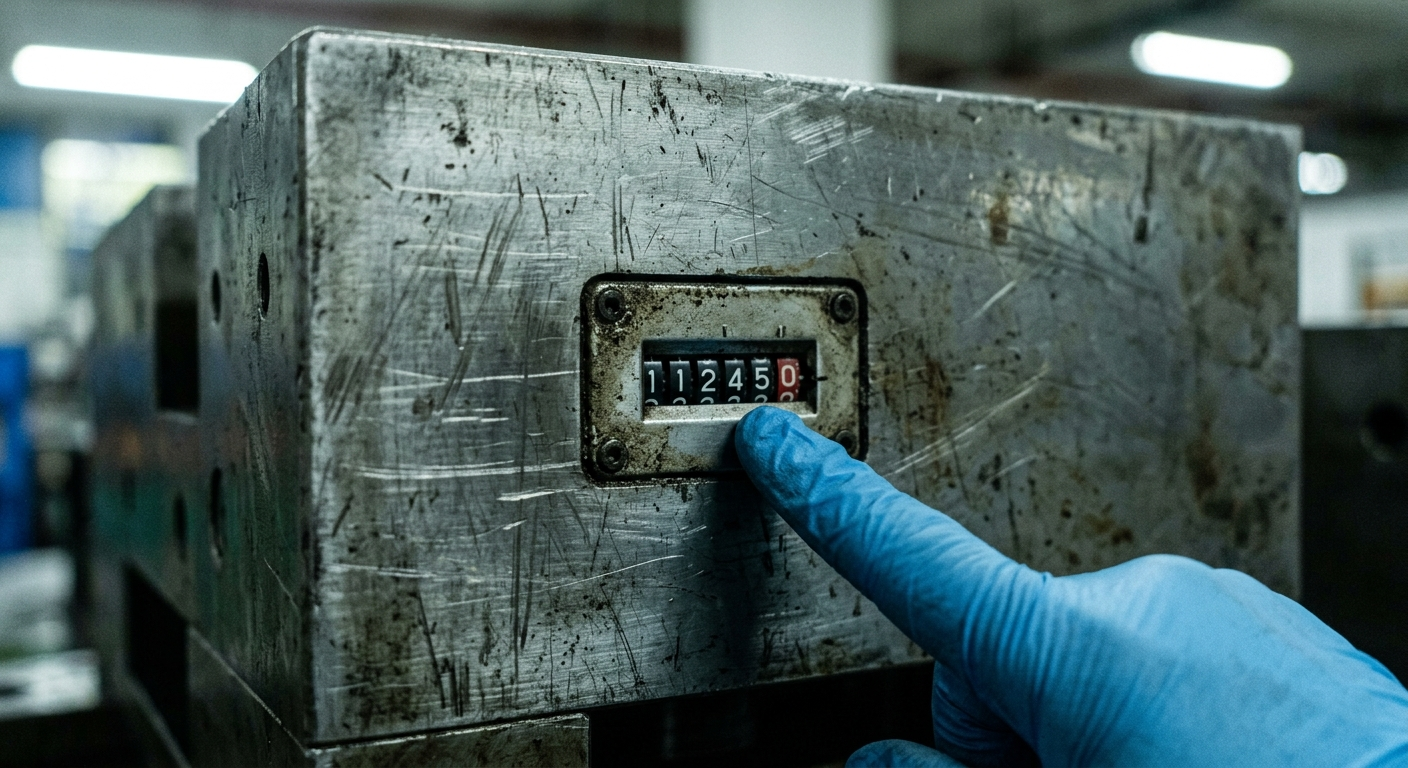
Fig 1: Bypassing paperwork. Our auditor executing a physical inspection of the mold's core mechanics to uncover hidden production data.
Phase 2: The Smoking Gun (The Math Doesn't Lie)
A professional supply chain auditor knows that paperwork can be forged, and workers can be coached. But mechanical data is immutable. We went straight for the Mold Shot Counter (Cycle Counter).
A shot counter is a small, non-resettable mechanical gauge embedded directly into the side of the injection mold base. Every time the massive hydraulic press closes to inject liquid plastic and form a product, the counter clicks forward by one. It is the odometer of manufacturing.
We wiped the industrial grease off the counter. The numbers we documented were devastating.
| Metric | Expected Data (Based on Client POs) | Actual Ground Truth (Shot Counter) | Discrepancy |
|---|---|---|---|
| Total Official Orders | 40,000 Units | N/A | - |
| Defect/Calibration Allowance (10%) | 4,000 Units | N/A | - |
| Total Authorized Cycles | Max 44,000 Shots | 112,450 Shots | + 68,450 Unauthorized Shots |
The math exposed the lie. The mold had been cycled over 112,000 times. Even with extremely generous allowances for calibration and scrap, there were over 68,000 unauthorized units produced.
The "heavy wear and tear" the factory was complaining about was entirely real—because they had been running a "Ghost Shift." Every night, after the official lines shut down, temporary workers were using our client's $65k tooling to pump out identical white-label smart home devices, flooding the South American and Eastern European domestic markets and actively cannibalizing our client's global market share.

Fig 2: The Confrontation. Presenting the undeniable mathematical discrepancy of the shot counter to factory management.
Phase 3: The Strategic Extraction (Securing the Asset)
We now had the leverage, but extracting a 3-ton piece of steel from a hostile factory requires tactical precision. You do not call the local police for a contract dispute; it becomes a civil matter that can trap the mold in legal limbo for years.
We deployed a three-pronged extraction strategy:
- Financial Freezing: We instructed the client to immediately hold the pending $120,000 Letter of Credit (LC) for the current, unshipped batch of goods. We now held their cash flow hostage.
- The "Face-Saving" Alibi: To prevent desperate destruction of the mold, we did not accuse the factory owner of theft in writing. Instead, we drafted a formal letter citing "unacceptable mold degradation based on cycle counts" and demanded the mold be transferred to a neutral, third-party "specialized maintenance facility" of our choosing before the $120k payment would be released.
- Physical Supervision: We did not wait for them to ship it. The next morning, we arrived at the factory gates with an independent, pre-vetted logistics truck and a heavy-duty crane.
Faced with frozen cash flow and photographic evidence of a massive breach of contract that would ruin their reputation on Alibaba and Global Sources, the factory owner capitulated. They signed the release forms.
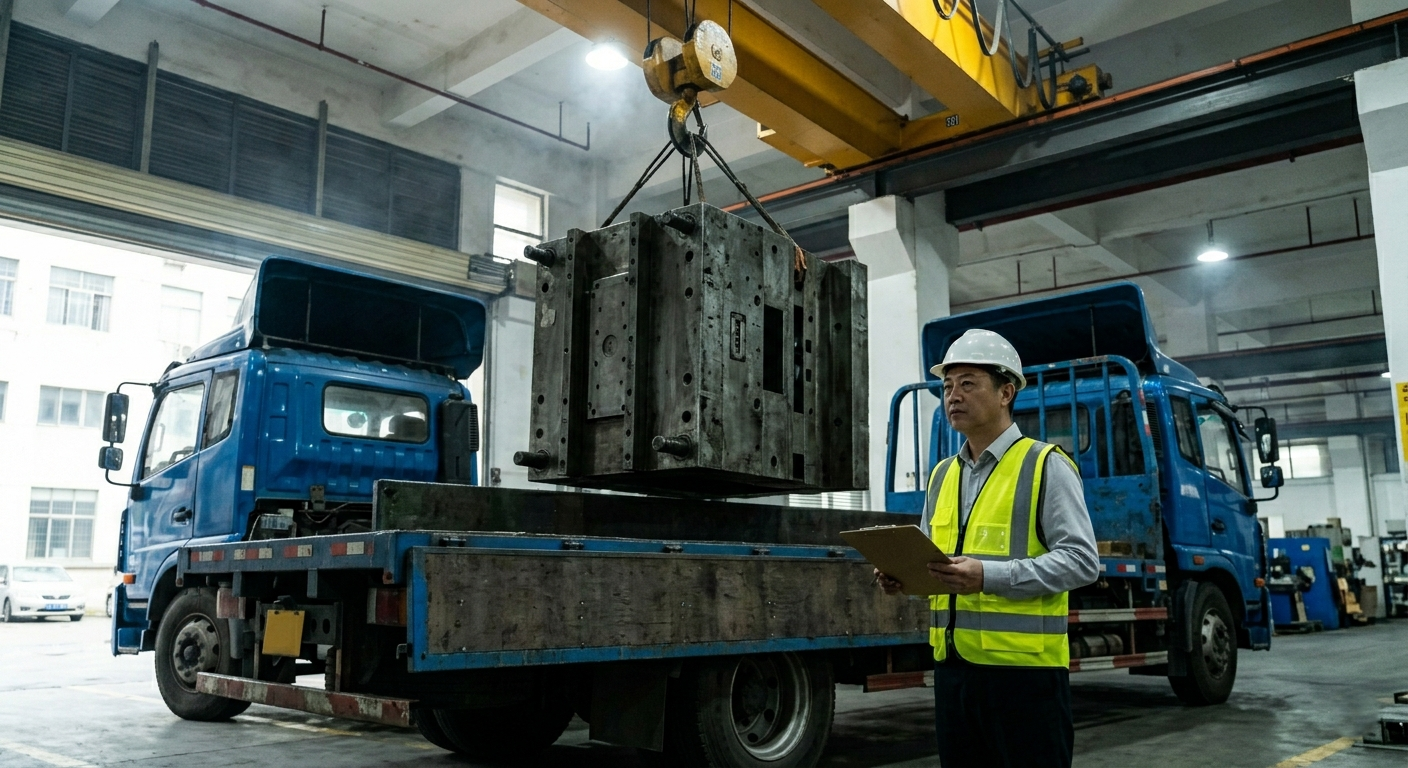
Fig 3: The Asset Extraction. Physically supervising the loading of the client's $65k proprietary molds onto an independent truck, terminating the parallel manufacturing operation.
The Result: Supply Chain Secured
Within 48 hours of uncovering the shot counter data, the 3-ton steel molds were safely resting in a highly secure, audited partner facility in Dongguan.
By relying on objective physical data rather than trusting paperwork or factory promises, we achieved three critical victories for the client:
- Secured a $65,000 physical asset, preventing a 6-month delay in their product roadmap.
- Terminated a massive intellectual property leak, cutting off the supply of 68,000+ parallel market clones.
- Avoided a costly, multi-year cross-border legal battle by using ground-truth data and financial leverage to force compliance.
True supply chain security in China isn't found in a PDF contract signed in New York. It is found in the grease, the steel, and the unblinking numbers of a mechanical cycle counter.